
Dental Implants in Izmir, Turkey
Natural Looking Dental Implants for Missing Teeth
We provide personalized dental implant treatment to replace missing teeth and restore the function and appearance of your smile. Whether you need to replace a single tooth, several missing teeth, or require implant supported restoration, your treatment is planned around your oral health, needs, and desired result.

What Are Dental Implants?
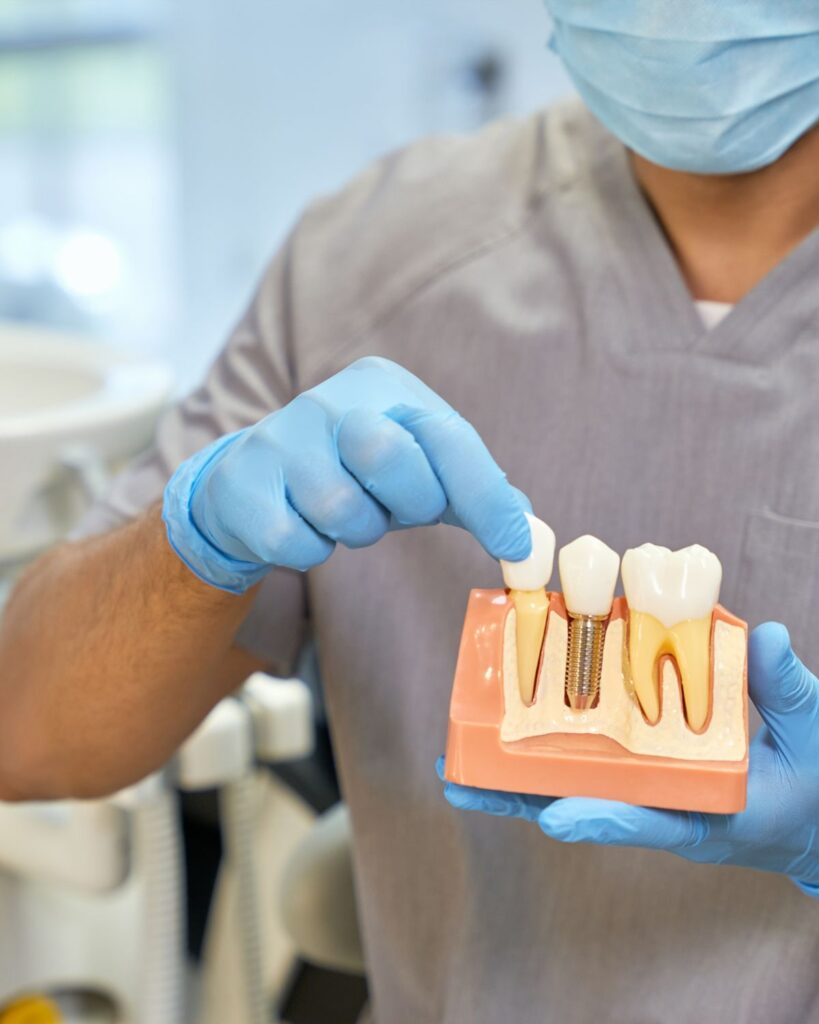
Dental implants are tooth replacement solutions designed to replace the root portion of a missing tooth. A small implant is placed into the jawbone, where it can gradually integrate with the surrounding bone. Once healing is complete, an abutment and dental restoration such as a crown, bridge, or denture can be attached to complete the treatment.
Dental implants can provide a stable foundation for replacement teeth and are designed to look and function more like natural teeth. Before treatment, your dentist will evaluate your teeth, gums, jawbone, and overall oral health to determine whether implants are an appropriate option for you.
Benefits of Dental Implants
Dental implants can offer several benefits for patients who have lost one or more teeth.
Replaces Missing Teeth
Implants can be used to replace a single missing tooth or support restorations for multiple missing teeth.
Restores Chewing and Speaking
Replacing missing teeth can make it easier to chew food and speak comfortably while helping restore normal oral function.
Natural Looking Smile
Implant supported restorations can be designed to complement the appearance of your natural teeth, including their shape, size, and color.
Supports Oral Function
A properly planned implant restoration can provide stability and support while reducing the need to rely on neighboring teeth for certain types of tooth replacement.
Long Term Tooth Replacement
With appropriate care and regular dental visits, dental implants can provide a long term solution for missing teeth. The longevity of an implant restoration depends on factors such as oral hygiene, overall health, biting forces, and regular professional care.

Who Is a Good Candidate for Dental Implants?
Dental implants may be suitable for many adults who have lost one or more teeth, but each patient needs an individual assessment before treatment.
Good oral health and healthy gums are important because the tissues surrounding the implant need to remain healthy during healing. Adequate jawbone support is also necessary to provide a stable foundation for the implant.
Some patients who have experienced bone loss may require additional treatment before implant placement. Your dentist can use dental X rays and other diagnostic information to evaluate the available bone and determine the most appropriate treatment approach.
Medical conditions, medications, smoking, oral hygiene, and other individual factors may also affect healing and implant treatment. During your consultation, your dentist will discuss your health history and explain whether dental implants are appropriate for your situation.
What to Expect During Dental Implant Treatment
Dental implant treatment is planned in stages to ensure that the implant and final restoration are properly positioned and suited to your needs.
1. Initial Consultation and Examination
Your dentist examines your teeth and gums, discusses your concerns, and reviews your dental and medical history. This helps determine whether dental implants are an appropriate option.
2. Dental X Rays and Treatment Planning
Dental X rays and other diagnostic images may be used to evaluate your jawbone, existing teeth, and surrounding structures. Your dentist then develops a treatment plan based on your individual needs.
3. Implant Placement
The dental implant is carefully placed into the jawbone at the planned location. Local anesthesia is used during the procedure to help keep you comfortable.
4. Healing and Integration
After placement, the implant needs time to heal and integrate with the surrounding bone. The length of this stage varies depending on the individual patient and treatment plan.
5. Abutment and Final Restoration
Once the implant has sufficiently healed, an abutment can be placed to connect the implant with the final restoration. Depending on your treatment, this may be a dental crown, bridge, or implant supported denture.

Recovery and Caring for Your Dental Implants
Recovery after dental implant placement varies depending on the number of implants, the type of procedure, and your individual healing process. Some swelling, tenderness, or discomfort can occur during the first few days and should gradually improve.
Your dentist will provide specific instructions for caring for the treatment area. Keeping your mouth clean, following recommended eating instructions, and attending follow up appointments can support proper healing.
Once the final restoration is placed, dental implants should be cared for with regular brushing, flossing, and professional dental checkups. Good oral hygiene is important for maintaining the health of the gums and tissues around the implant.
Avoid using your implant restoration to bite extremely hard objects, and contact your dentist if you notice persistent discomfort, swelling, movement, or changes around the implant.
Frequently Asked Questions About Dental Implants
Are dental implants painful?
The implant placement procedure is performed with local anesthesia to help keep you comfortable. Some tenderness, swelling, or discomfort can occur after treatment, but your dentist will provide appropriate aftercare instructions to help manage recovery.
How long does dental implant treatment take?
The overall treatment time varies depending on your oral health, the number of implants, bone condition, and whether additional procedures are required. Some treatments can be completed in a shorter period, while others require several months to allow adequate healing before the final restoration.
How long do dental implants last?
Dental implants are designed to provide a long term tooth replacement solution. Their longevity depends on factors such as oral hygiene, gum health, general health, biting forces, and regular dental care.
Can dental implants replace multiple missing teeth?
Yes. Dental implants can be used to replace multiple missing teeth and can also support bridges or implant supported dentures. Your dentist can recommend the appropriate number and placement of implants based on your individual needs.
Are dental implants suitable for everyone?
Not everyone is immediately suitable for dental implant treatment. Your dentist will evaluate your gums, jawbone, oral health, medical history, and other factors to determine whether implants are appropriate or whether additional treatment may be needed first.